Table of Contents
Features of the Dual-Cylinder Four-Stroke Brushless DC Motor Tracked RC Slasher Mower
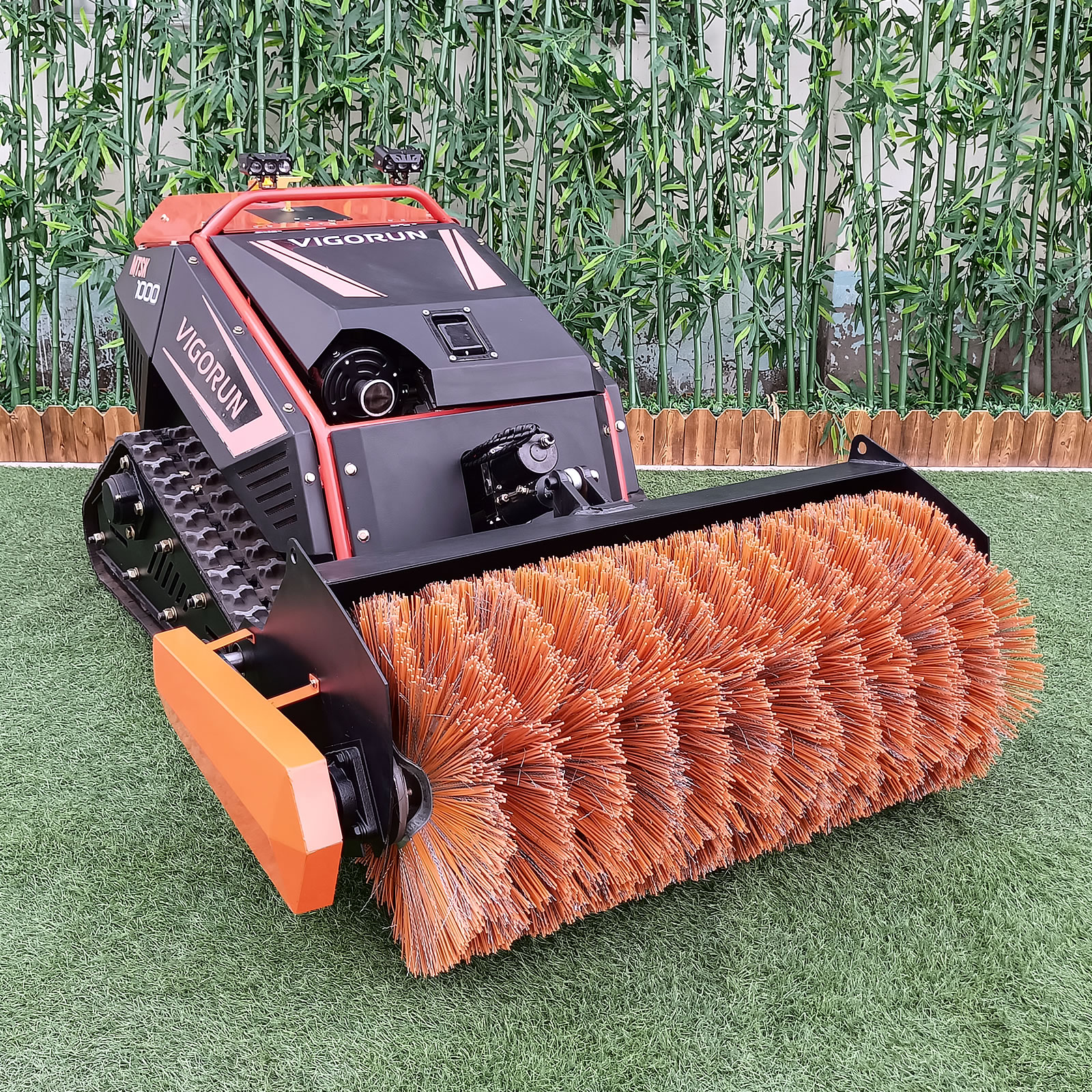
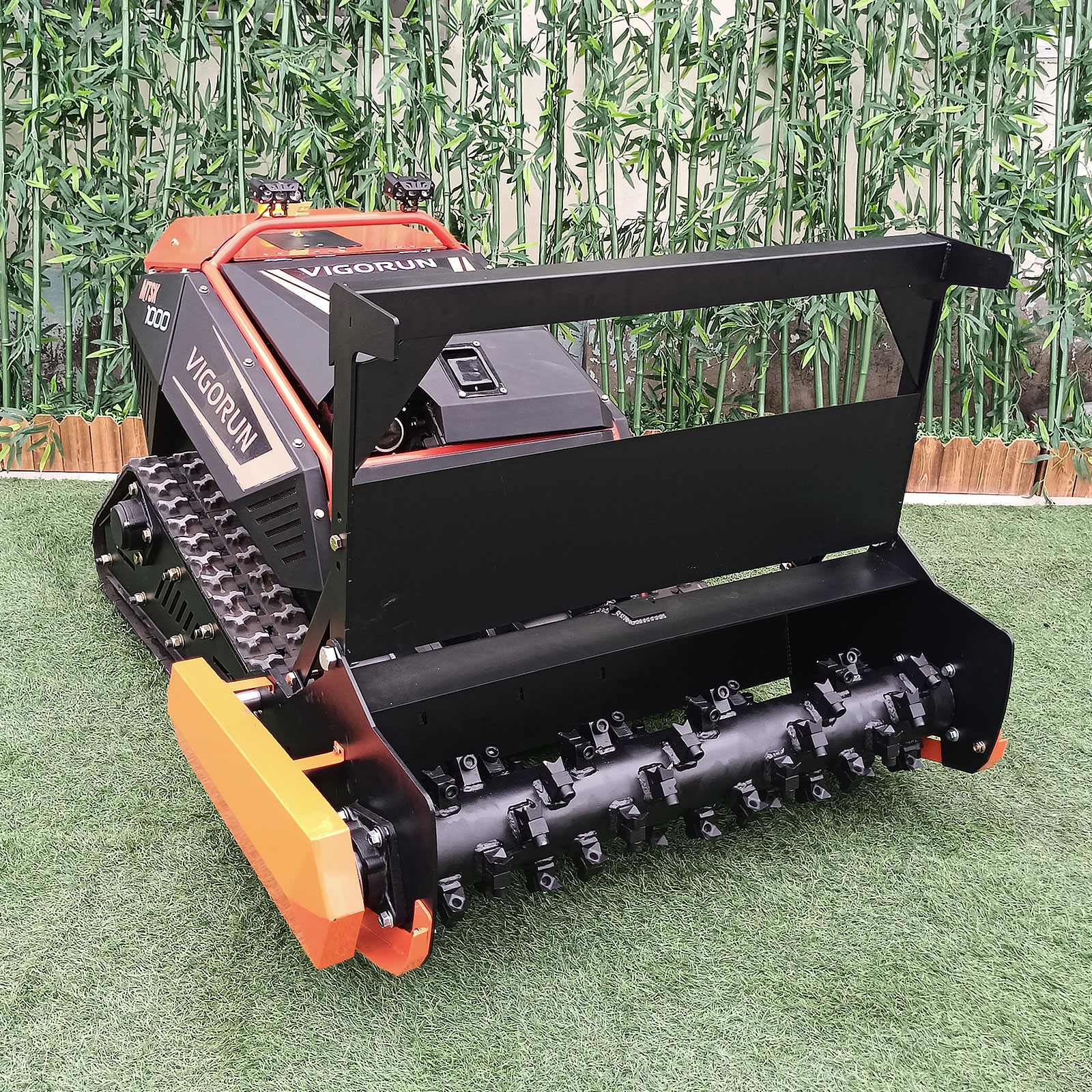
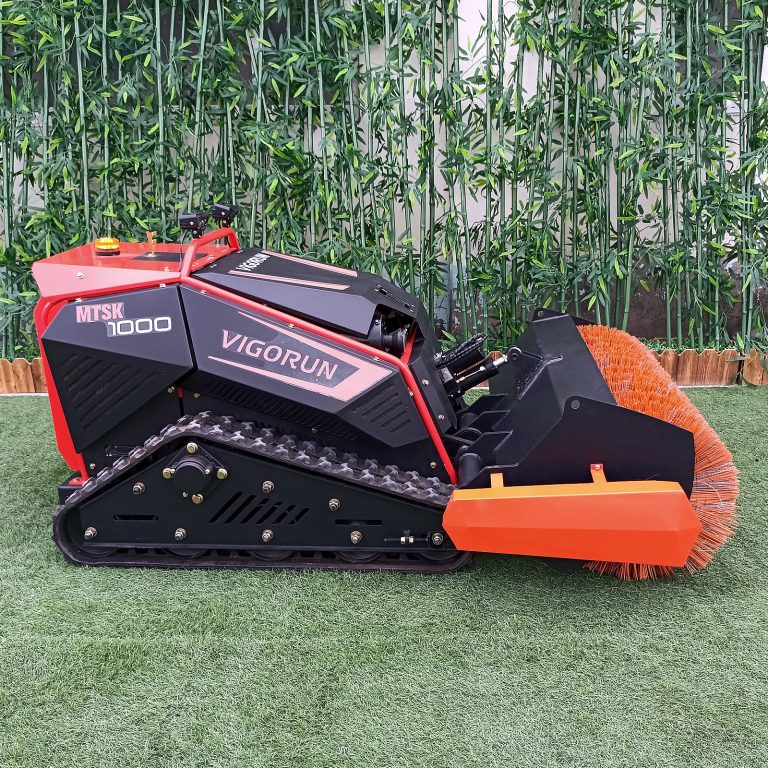
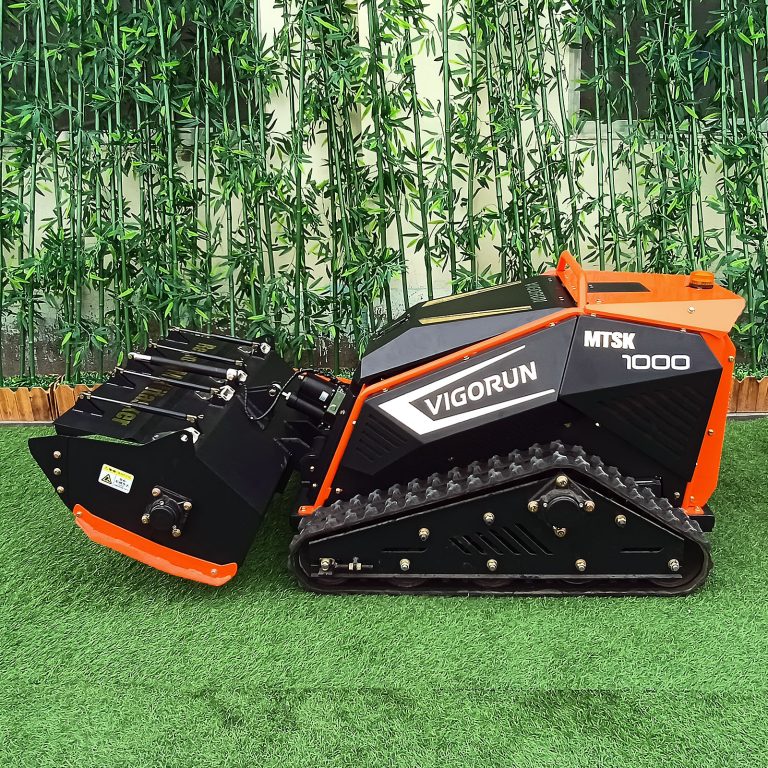
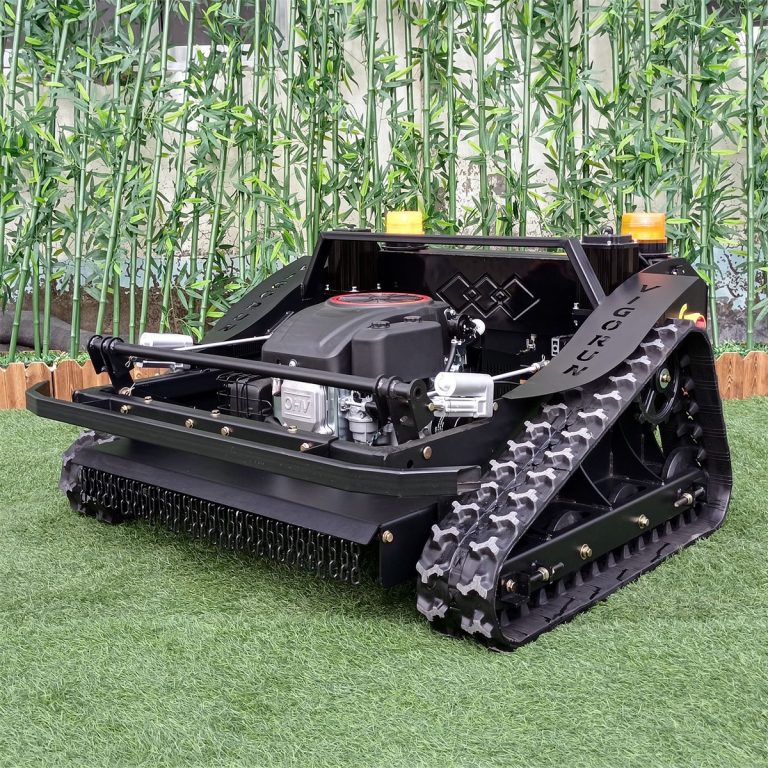
The dual-cylinder four-stroke brushless DC motor tracked RC slasher mower stands out with its powerful V-type twin-cylinder gasoline engine. Manufactured by Vigorun Tech, this machine is equipped with the Loncin brand, model LC2V80FD, which boasts a rated power of 18 kW at 3600 rpm. The 764cc gasoline engine provides robust performance, ensuring that the mower can tackle demanding tasks with ease. Safety and efficiency are paramount in the design of this mower. The engine features a clutch that engages only when a predetermined rotation speed is reached, preventing accidental starts and enhancing user control. This thoughtful engineering guarantees that operators can work safely without worrying about unintended movements.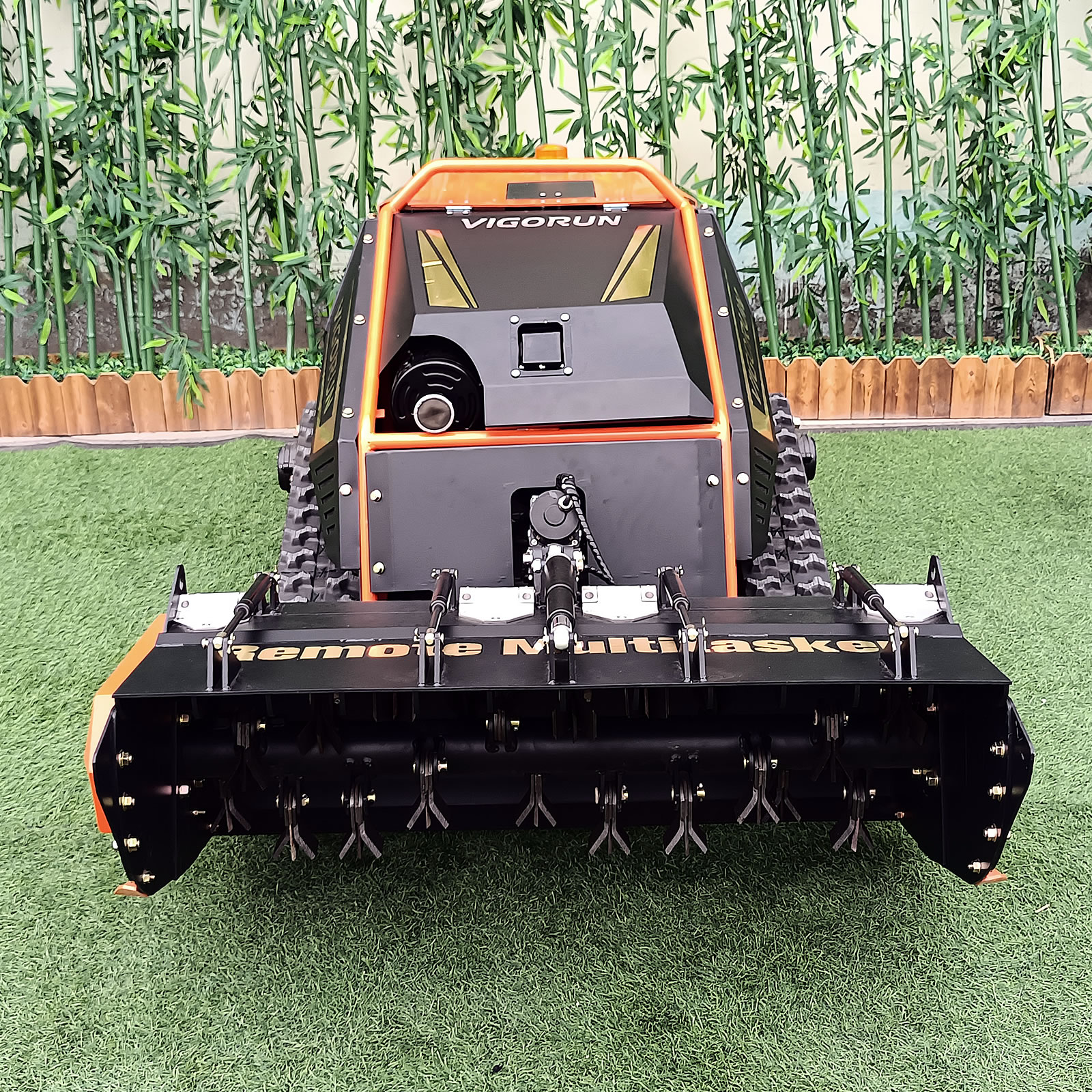 Additionally, the dual-cylinder engine is complemented by two 48V 1500W servo motors that deliver impressive power and climbing capabilities. With a built-in self-locking function, the machine remains stationary unless both power is on and the throttle is applied. This feature significantly enhances operational safety by preventing unintentional sliding during use.

Innovative Technology Behind the Mower
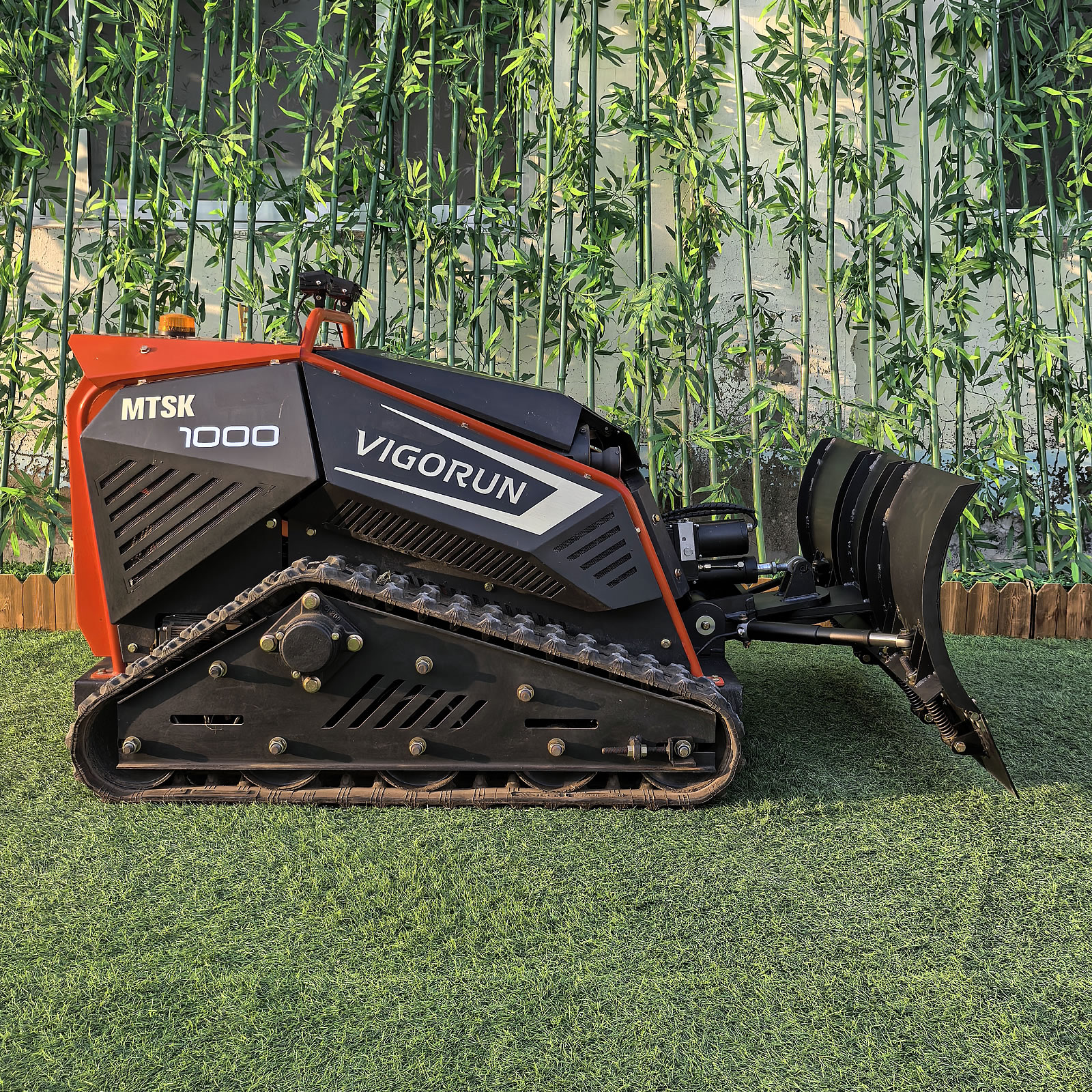 One of the standout features of the dual-cylinder four-stroke brushless DC motor tracked RC slasher mower is its high reduction ratio worm gear reducer. This component multiplies the already strong torque generated by the servo motors, providing immense output torque that is essential for challenging inclines. In the event of a power loss, the friction between the worm and gear ensures mechanical self-locking, preventing the mower from sliding downhill, which is critical for maintaining safety during operation.
Moreover, the intelligent servo controller plays a crucial role in regulating motor speed and synchronizing the left and right tracks. This innovation allows the mower to travel in a straight line without constant adjustments from the remote, reducing the operator’s workload. By minimizing the risks associated with over-correction on steep slopes, users can focus more on the task at hand rather than managing the mower’s direction.
One of the standout features of the dual-cylinder four-stroke brushless DC motor tracked RC slasher mower is its high reduction ratio worm gear reducer. This component multiplies the already strong torque generated by the servo motors, providing immense output torque that is essential for challenging inclines. In the event of a power loss, the friction between the worm and gear ensures mechanical self-locking, preventing the mower from sliding downhill, which is critical for maintaining safety during operation.
Moreover, the intelligent servo controller plays a crucial role in regulating motor speed and synchronizing the left and right tracks. This innovation allows the mower to travel in a straight line without constant adjustments from the remote, reducing the operator’s workload. By minimizing the risks associated with over-correction on steep slopes, users can focus more on the task at hand rather than managing the mower’s direction.