Table of Contents
Exceptional Performance of the Dual-Cylinder Four-Stroke 100cm Cutting Blade Rubber Track RC Brush Mulcher
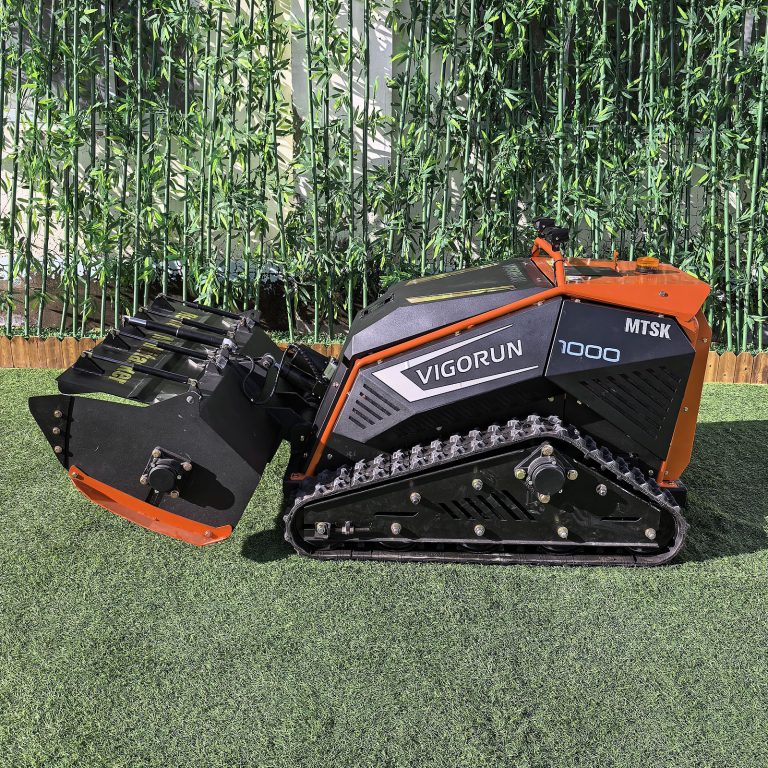
 The dual-cylinder four-stroke 100cm cutting blade rubber track RC brush mulcher is a powerful machine that stands out for its robust performance and versatility. Equipped with a V-type twin-cylinder gasoline engine, specifically the Loncin brand model LC2V80FD, this brush mulcher boasts a rated power of 18 kW at 3600 rpm. The 764cc gasoline engine provides formidable output, ensuring efficient operation in various tasks.
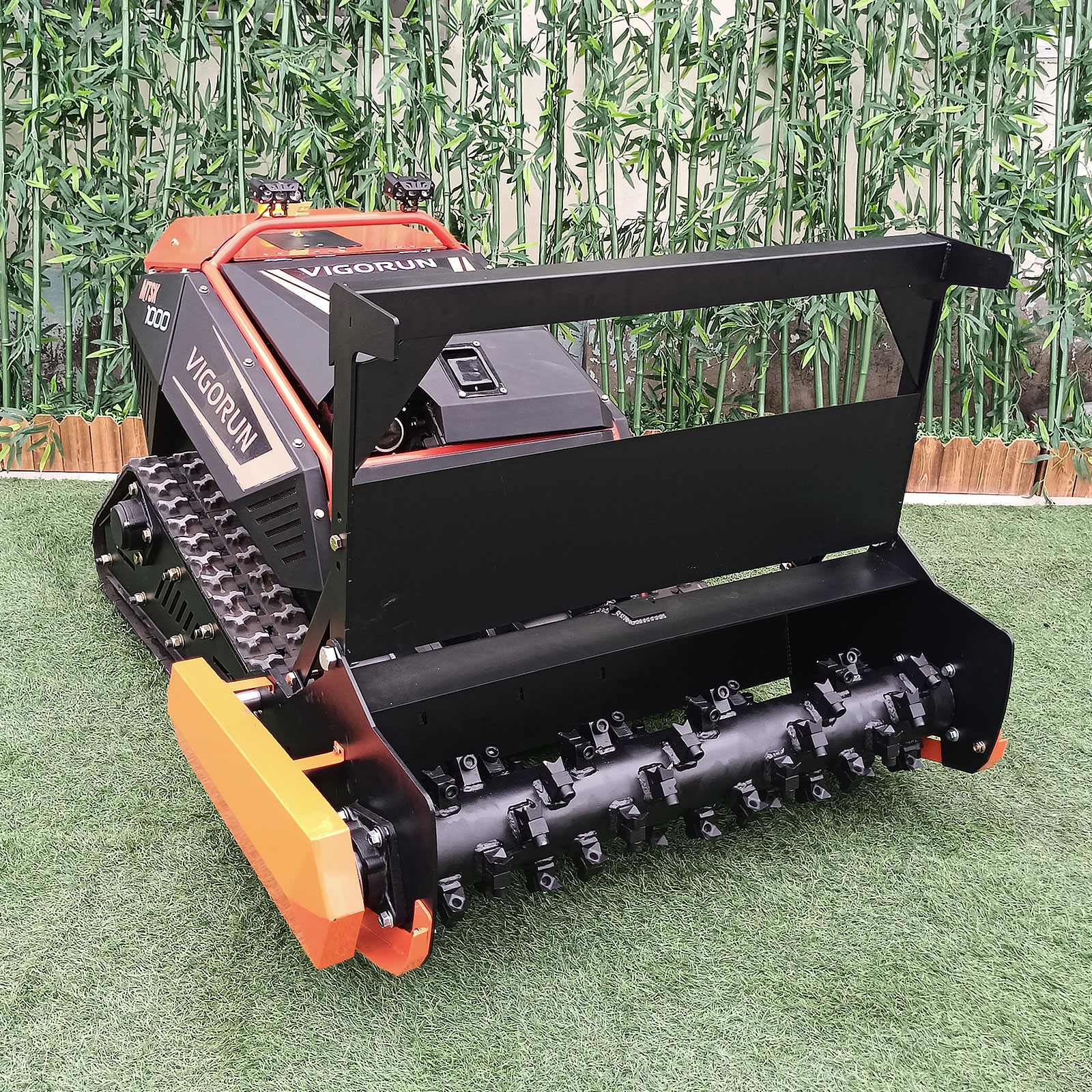
Versatile Applications and Innovative Design
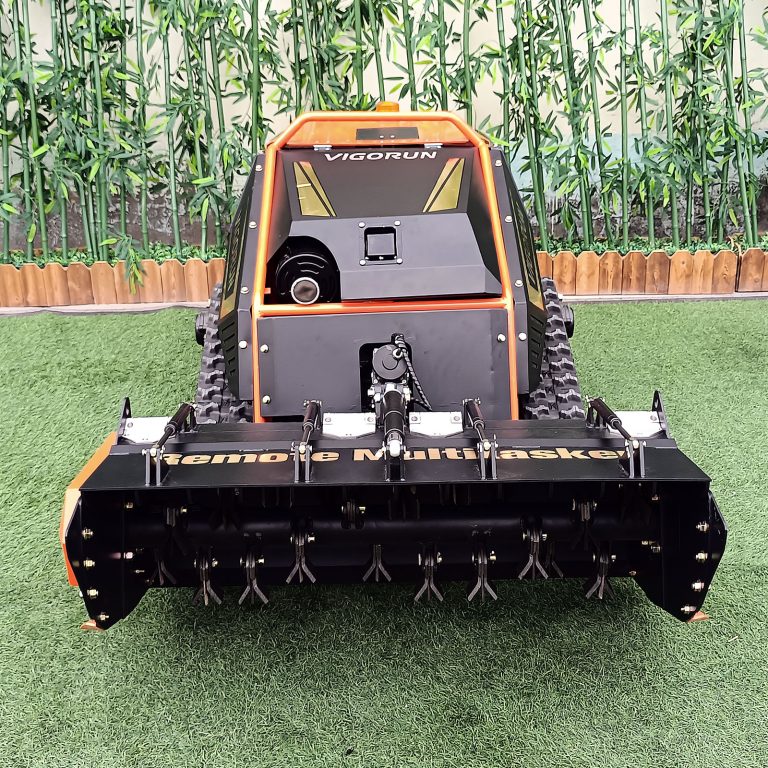
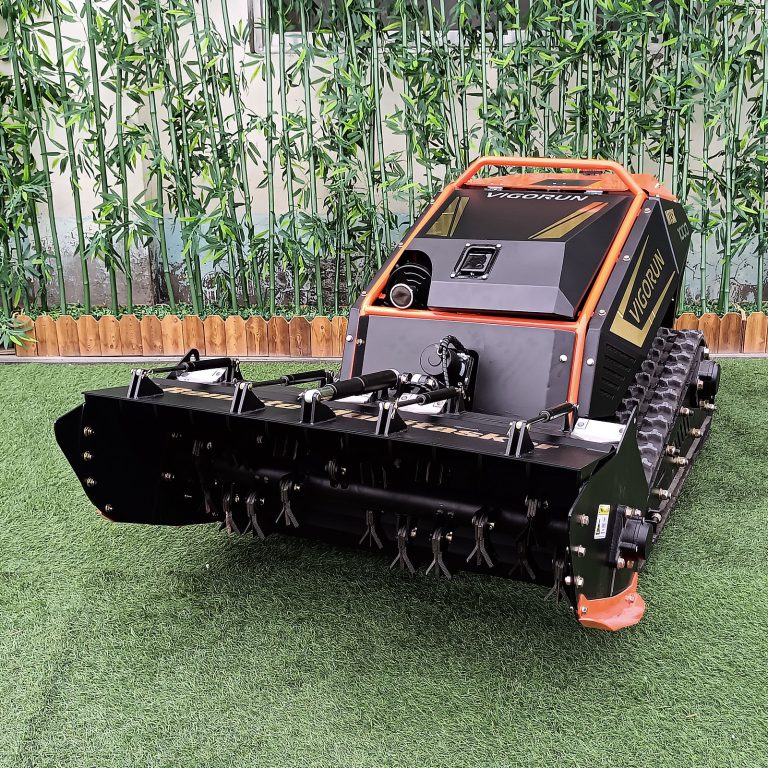
The innovative design of the dual-cylinder four-stroke 100cm cutting blade rubber track RC brush mulcher makes it suitable for a wide range of applications. It features electric hydraulic push rods that allow for remote height adjustment of attachments, enabling users to customize the machine for different tasks effortlessly. This level of adaptability is crucial for handling varied terrains and vegetation types. Users can equip the brush mulcher with a variety of front attachments, including a 1000mm-wide flail mower, hammer flail, forest mulcher, angle snow plow, or snow brush. This multi-functional capability means the machine can easily transition from heavy-duty grass cutting and shrub clearing to effective snow removal. Such versatility ensures that operators can maximize their productivity throughout the year.
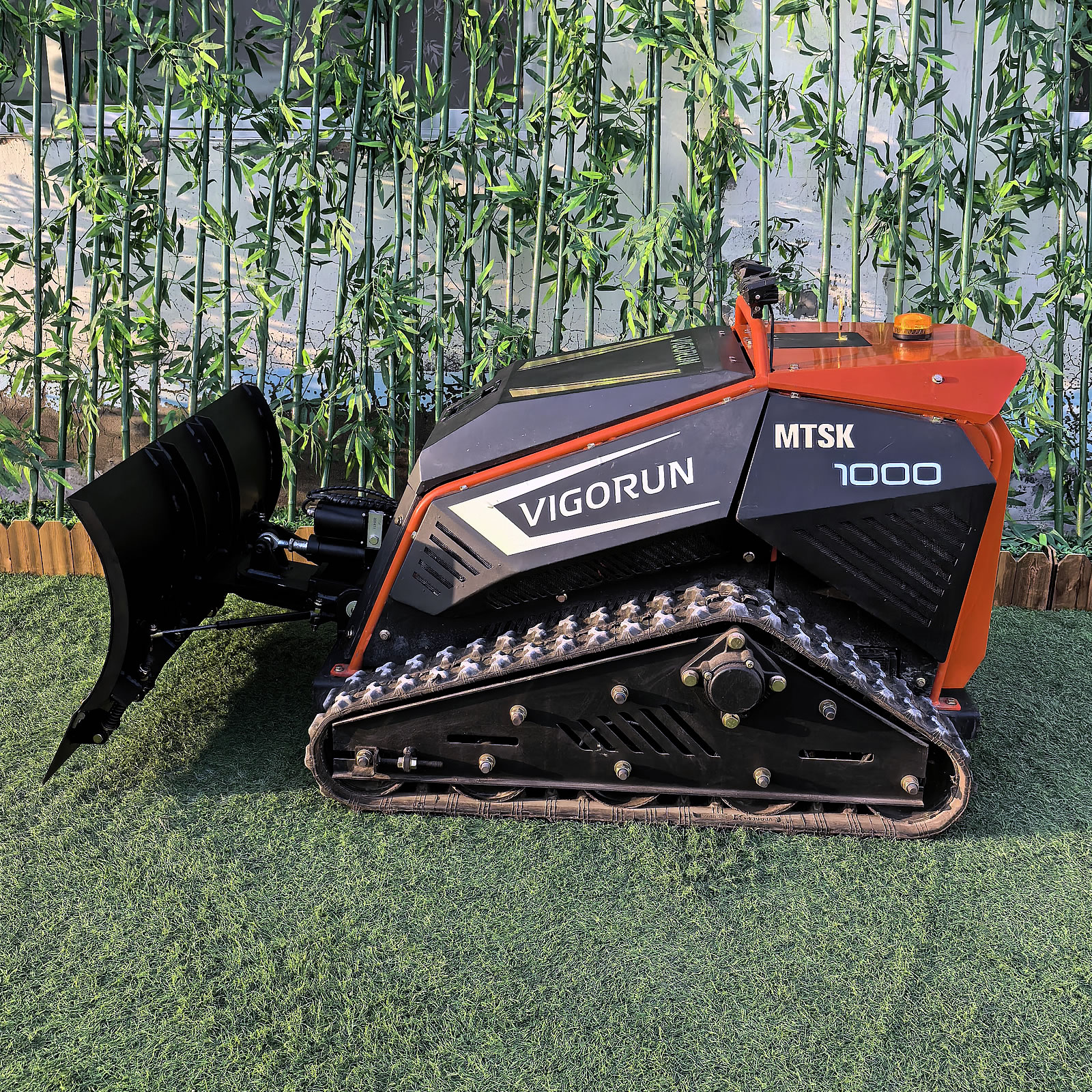 Another remarkable aspect of this brush mulcher is its intelligent servo controller, which regulates motor speed and synchronizes the left and right tracks. This technology allows the mower to travel in a straight line without constant manual adjustments, significantly reducing operator workload. Moreover, it minimizes risks associated with overcorrection on steep slopes, making it a safer option for challenging environments.
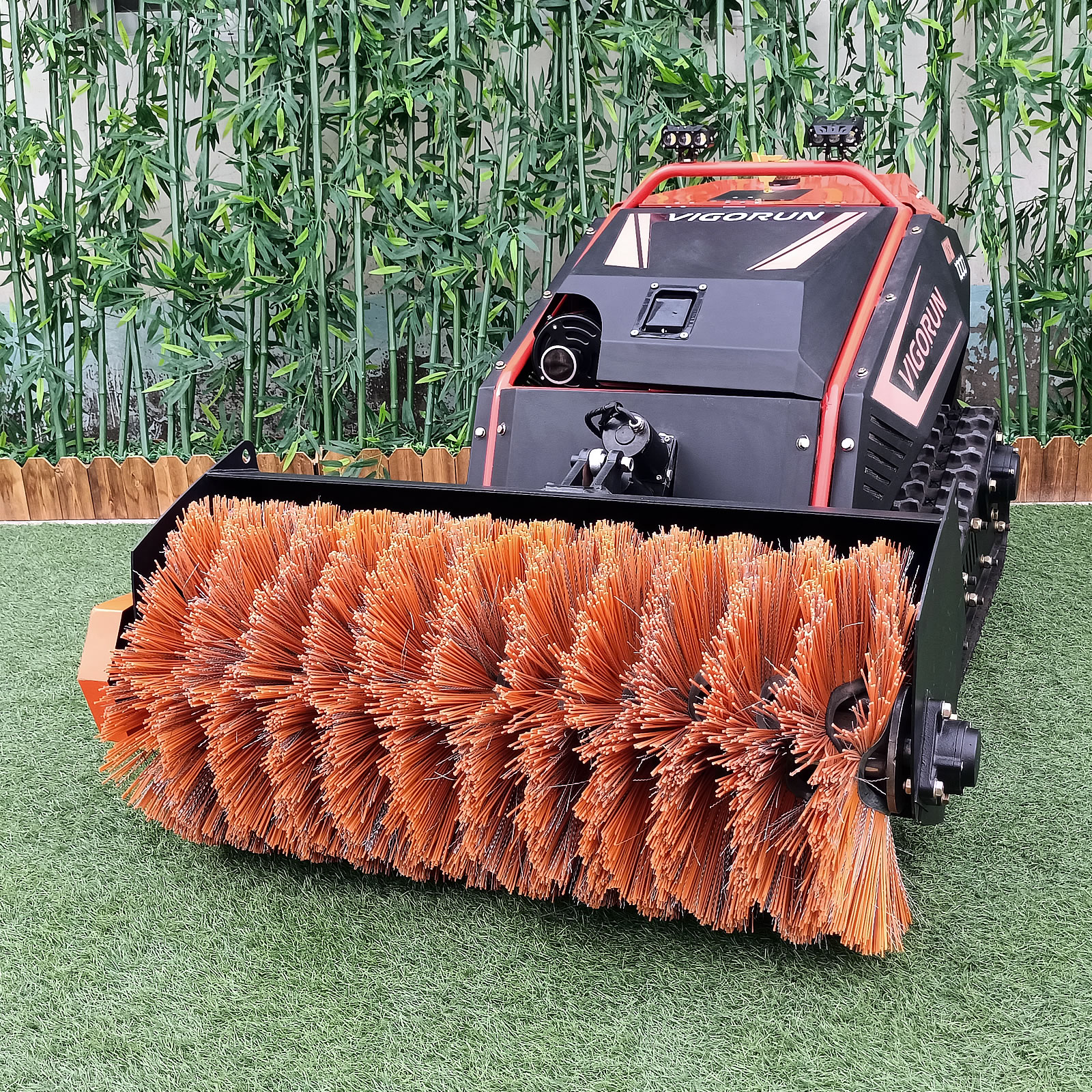 With a high reduction ratio in its worm gear reducer, the dual-cylinder four-stroke 100cm cutting blade rubber track RC brush mulcher delivers immense output torque suitable for climbing resistance. The friction between the worm and gear provides mechanical self-locking, preventing the machine from sliding downhill during power loss. This ensures consistent performance and safety, even in the most demanding conditions.